Animal Faces Filled Line Icons: Your Guide to Smarter Design Choices
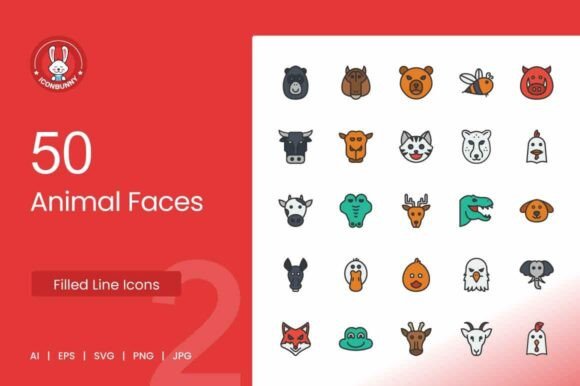
Whether you're building a mobile app, designing a website, or creating marketing materials, the right icon set can make or break your project. The Animal Faces Filled Line Icons collection offers a versatile suite of 50 distinct animal faces, from the playful Cat Face and Dog Face to the majestic Lion Face and Elephant Face. But simply having a great collection isn't enough. How you choose, implement, and evaluate these icons determines their true impact on your work.
Why a Unified Animal Face Icon Set Matters
Using random, mismatched icons from different sources is a common pitfall. It creates visual dissonance, undermines your professional credibility, and confuses your audience. A cohesive set like the Animal Faces Filled Line Icons ensures every element, from the Fox Face to the Frog Face, shares the same design language. This consistency is crucial for user experience, brand recognition, and creating a polished, trustworthy interface.
Overlooking the Technical Foundations
One of the biggest mistakes is focusing solely on the visual appeal and ignoring the technical specs. You might love the design of the Tiger Face or Bear Face, but if the icons aren't built for scalability, you'll run into problems.
Scalability and Vector Formats
A pixelated icon on a high-resolution screen looks unprofessional. The Animal Faces Filled Line Icons are designed as 100% vector graphics. This means the Monkey Face or Panda Face will remain crisp and clear whether it's a tiny favicon or a large print illustration. Always check that your icons are provided in vector formats like SVG and EPS. Raster formats like JPG are useful for quick mockups but fail for scalable, production-ready assets.
Format Flexibility and Workflow
Your project will demand different file types. A web developer needs SVG for performance and styling control. A graphic designer might need AI or EPS for advanced editing in Illustrator. A content creator might need PNG files with transparent backgrounds for presentations or social media. The strength of this set lies in its inclusion of 5 different formats, ensuring the Parrot Face or Owl Face is ready for your specific workflow, not the other way around.
Ignoring Usability and Consistency
An icon's job is to communicate instantly. A poorly designed icon fails this test. This collection is built on a unigrid system, meaning every icon—from the Rabbit Face to the Rhino Face—occupies the same optical weight and visual balance. This isn't just about aesthetics; it's about usability.
Imagine a navigation bar with a Goat Face that's visually heavier than the Deer Face next to it. Users' eyes are drawn unevenly, disrupting the flow. The unigrid system prevents this, creating a harmonious and intuitive interface. Before using any icon set, test how the icons look together in a group. Do they align? Do they have similar line weights and fill densities?
Underestimating the Need for Customization
"Ready to use" doesn't mean "one-size-fits-all." A frequent oversight is failing to adapt icons to your brand's color palette or specific context. The Animal Faces Filled Line Icons are designed to be easy to edit and scale. Don't just drop in the default Horse Face. Change its color to match your brand's primary hue. Adjust the stroke weight if your design calls for a bolder or lighter look. This small step transforms a generic asset into a branded, intentional design element.
Practical Advice for Evaluation and Implementation
Before you commit to an icon set, ask these practical questions:
- Does it cover my needs? Scan the full list. Does it include the specific animals relevant to your project, like a Sea Lion Face for a marine biology site or a Dinosaur Face for a children's educational app?
- How will I use them? Will they be in an app's bottom navigation, on a website's feature list, or in printed brochures? Ensure the formats provided (like PNG for web, EPS for print) align with your primary use cases.
- Can I test before I buy? Reputable sources often provide a sample. Use it. Place the Cow Face and Bee Face in your actual design mockup. Do they feel right? Do they scale properly?
A better approach than collecting free icons from various sites is investing in a single, comprehensive, and well-engineered set. The time you save searching for a matching Hen Face or Camel Face is time you can spend on actual design and development. You also avoid legal gray areas and ensure consistent quality.
Beyond the Basics: Leveraging the Full Set
Think creatively about how these icons can serve your audience. An e-commerce site selling pet supplies could use the Dog Face, Cat Face, and Bird Face for product categories. A fitness app could use the Buffalo Face for strength training or the Cheetah Face for sprint intervals. A restaurant's menu could feature the Pig Face for pork dishes or the Lamb Face for lamb. The Animal Faces Filled Line Icons aren't just decorative; they're functional tools for clearer communication and engagement.
Choosing the right visual assets is a foundational design decision. By understanding the technical strengths of a set like the Animal Faces Filled Line Icons, avoiding common pitfalls in consistency and scalability, and applying them thoughtfully to your specific context, you ensure your projects look professional, communicate effectively, and resonate with your audience. Take the time to evaluate, customize, and implement with intention—the results will speak for themselves.