Evaluating the Elections Outline Icon Set: A Practical Guide for Developers and Designers
In the realm of digital design, the assets we choose often define the user experience just as much as the layout or copy. For projects centered around civic engagement, voting portals, or government interfaces, the visual language must convey trust, clarity, and neutrality. This is where the Elections Outline Icon collection comes into focus. It is not merely a set of graphics; it is a comprehensive toolkit designed to bridge the gap between complex political processes and user-friendly digital interfaces. This article provides a detailed analysis of this icon set, exploring its technical specifications, versatility, and practical applications to help you determine if it aligns with your project requirements.
Understanding the Core Concept of Elections Outline Icons
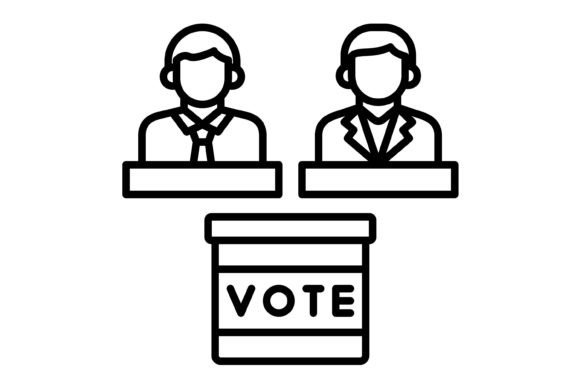
At its foundation, the Elections Outline Icon set is a curated collection of vector graphics intended to represent various aspects of the democratic process. Unlike solid or filled icons, outline icons rely on line work to define shapes. This style is frequently preferred in modern UI design because it tends to be lighter, less visually cluttered, and easier to integrate into minimalist layouts. The aesthetic of these icons is distinct; they prioritize semantic meaning, ensuring that a ballot box, a voting booth, or a checkmark is instantly recognizable regardless of the user's cultural background.
The "outline" approach offers a specific visual tradeoff compared to flat or 3D styles. While filled icons can sometimes offer better visibility at extremely small sizes or in low-contrast environments, outline icons—particularly those in this set—offer a level of sophistication and airiness. They allow the background to breathe, which is crucial when placing icons over complex imagery or within data-heavy dashboards. The Elections Outline Icon collection distinguishes itself by maintaining high legibility even within this lighter stylistic framework.
Technical Versatility: The Value of Multiple File Formats
One of the most significant decision factors when evaluating design assets is the file delivery. A frequent pain point for developers is receiving a generic pack that requires conversion or manual tracing before use. This particular set addresses that friction by including 5 different formats: AI, EPS, JPG, PNG Transparent Background, and SVG.
This variety is not arbitrary; each format serves a distinct workflow:
- SVG (Scalable Vector Graphics): This is arguably the most critical format for modern web and mobile development. SVGs are code-based, meaning they are lightweight and can be scaled to any size without pixelation. For responsive design, where an icon might appear as a 16px favicon or a 500px hero image, the SVG format ensures the Elections Outline Icon remains crisp.
- AI and EPS: These are native vector formats for Adobe Illustrator and other professional design software. They are essential for designers who need to customize the icons—changing line weights, adjusting anchor points, or altering colors before exporting for the web.
- PNG with Transparent Background: While vectors are superior for scaling, PNGs remain the standard for environments where vector support is limited (such as certain legacy email clients or social media platforms). The transparency allows the icon to be placed over any background color without a white box surrounding it.
- JPG: Useful for quick mockups, presentations, or contexts where file size is less of a concern than universal compatibility.
By bundling these formats, the Elections Outline Icon set effectively eliminates the need for external conversion tools, streamlining the workflow from design to deployment.
Comparing Outline Icons with Other Styles
When researching icon libraries, you will inevitably encounter solid, glyph, and flat styles. Understanding the differences helps in making an informed choice.
Outline vs. Solid/Glyph: Solid icons are often bolder and can be easier to perceive for users with visual impairments or on low-resolution screens. However, they can feel "heavy" and dominant in a user interface. The Elections Outline Icon style is generally better suited for professional, airy, or corporate aesthetics where the icon should support the text rather than overpower it.
Outline vs. Isometric/3D: While 3D icons are trending in some app ecosystems, they carry a higher cognitive load and can look dated quickly. Outline icons are timeless. They adapt well to changing color trends because they can easily be recolored via CSS or design software.
The tradeoff is specificity. A generic "document" icon might suffice for a file upload, but a specialized Elections Outline Icon—such as one depicting a specific ballot counting method—provides immediate context that a generic set cannot match. If your project requires high specificity in the political or civic niche, a generalized icon set will likely fail to communicate the necessary nuances.
Use Cases and Best-Fit Scenarios
The utility of the Elections Outline Icon set extends across various platforms and devices. Because the assets are designed as vectors, they are inherently responsive. Here are some practical scenarios where this set excels:
- Civic Engagement Mobile Apps: Mobile screens have limited real estate. Outline icons are excellent for bottom navigation bars because they occupy less visual space. An app helping citizens find polling stations or register to vote would benefit from the clarity of these icons.
- Government and NGO Websites: These organizations often require a look that is authoritative yet accessible. The clean lines of the Elections Outline Icon fit well within institutional color palettes (blues, reds, and neutrals) without clashing.
- News Media and Journalism: For articles covering elections, interactive maps, or data visualizations, these icons can serve as effective markers or legends.
- Educational Templates: Teachers creating presentations about history or civics can use these icons to visually break up text and highlight key concepts like "voting rights" or "congress."
The feature that this set is "Ready to use for all devices and platforms" is a crucial selling point. It implies that the icons have been optimized for rendering engines across iOS, Android, Windows, and macOS, reducing the QA burden on the developer.
Scalability and Editability: The 100 Vector Icons Advantage
The promise of 100 vector icons suggests a comprehensive library. In the context of elections, this volume likely covers the entire lifecycle of a democratic process—from registration and campaigning to voting and certification.
Scalability is the primary technical benefit here. When you scale a raster image (like a JPG), you lose quality. When you scale a vector, you are simply mathematically recalculating the coordinates. This means a single Elections Outline Icon can be used for a tiny UI button and a massive printed banner without any loss of fidelity.
Editability is equally important. The note that they are "Easy to edit and scale" implies that the vector paths are clean and unmerged. This allows a designer to take an icon of a ballot box and easily remove a line, add a checkmark, or change the stroke width to match a specific design system (like Material Design or Apple's Human Interface Guidelines).
Decision Factors: When to Choose This Set
Choosing an icon set is a balance of aesthetics, technical requirements, and licensing. Based on the specifications provided, here is a summary of when the Elections Outline Icon set is likely the right choice:
- You need cross-platform consistency: If your project spans a website, an iOS app, and printed brochures, the inclusion of AI/EPS and SVG/PNG ensures visual consistency across all mediums.
- Your design system favors minimalism: If your brand guidelines emphasize whitespace and clean typography, outline icons will integrate much better than heavy glyph icons.
- You require niche specificity: General icon packs (like "Font Awesome" or "Feather") may have a vote checkmark, but they likely lack specific imagery for campaign finance, legislative processes, or diverse voter representation. A dedicated set solves this.
However, if your project requires animated icons or highly complex, colorful illustrations, a static outline set might feel too restrained. In that case, you might need to supplement this set with custom illustrations.
Conclusion on Practicality
The Elections Outline Icon collection positions itself as a practical, high-utility resource for a specialized niche. By offering 5 different formats and ensuring the assets are easy to edit and scale, it addresses the common technical bottlenecks designers face. For professionals working on civic tech, political campaigns, or educational materials, this set offers a balance of aesthetic neutrality and semantic precision. It provides the necessary tools to create interfaces that are not only visually appealing but also functionally clear, ensuring that the message of the election process is communicated effectively to the end-user.