Mastering the Paint Outline Icon: A Creator's Guide to Avoiding Common Pitfalls
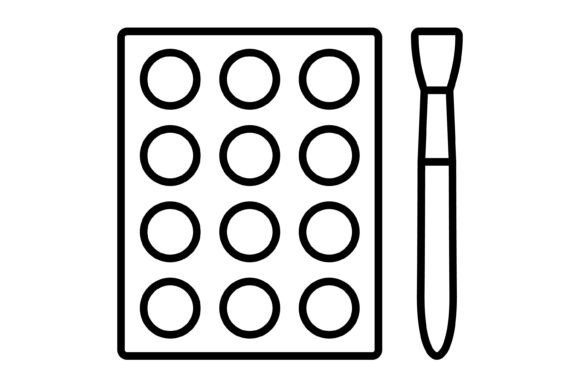
When you're building a website, designing a mobile app, or putting together a professional presentation, every visual element matters. You've likely come across the Paint Outline Icon, a versatile graphic asset designed to symbolize creativity, design, editing, or artistic projects. At first glance, it seems simple: download the icon, drop it into your project, and move on. However, many users—from freelancers to small business owners—often run into issues that compromise their design quality and workflow efficiency. Understanding what comes inside your icon package, specifically the File Formats Included in Zip File, is the first step to avoiding these frustrations.
The Danger of Ignoring File Formats
One of the most common mistakes is treating all image files as equals. You might be tempted to grab the first JPG file you see because it’s a format you recognize. This is where trouble begins. A JPG is a raster image, meaning it has a fixed resolution. If you try to scale a Paint Outline Icon saved as a JPG for a large billboard or a high-resolution display, it will pixelate and look unprofessional.
The zip file you downloaded likely contains 5 Different formats: AI, EPS, JPG, PNG Transparent Background, and SVG. Each serves a distinct purpose, and choosing the wrong one can lead to wasted time and poor results.
- SVG (Scalable Vector Graphics): This is your best friend for web and mobile. Because it is code-based, it scales infinitely without losing quality and keeps file sizes small. It is Suitable for Mobile Apps, Websites, and responsive design.
- AI and EPS: These are native vector files intended for professional editing software like Adobe Illustrator. If you need to change the color, stroke weight, or shape of the icon, you must use these. Do not try to edit a JPG or PNG in a basic photo viewer; you will lose quality.
- PNG Transparent Background: Use this for presentations or websites where you cannot edit the code. The transparency ensures the icon doesn't have an ugly white box around it, blending seamlessly into your layout.
Customization: Are You Stuck with What You Get?
A significant misunderstanding regarding the Paint Outline Icon is that you are stuck with the default design. Beginners often accept the icon exactly as it is, even if the line weight doesn't match their typography or the color clashes with their brand palette.
Since these are 100 vector icons designed with Easy to edit and scale capabilities, you have total control. However, many users make the mistake of editing the PNG file in a tool like Microsoft Paint or Canva. While you might manage to change a color, you will degrade the crispness of the lines.
The Better Approach: Open the AI or EPS file in a vector editor (like Adobe Illustrator, Affinity Designer, or even the free tool Inkscape). Because the icon is designed as a vector, you can adjust the stroke thickness to match your "bold" headers or change the color to a specific hex code for your brand identity. This ensures your Paint Outline Icon looks like a custom-made asset rather than a generic clipart.
Overlooking the "Outline" Style
Another area where users make poor decisions is in style consistency. You downloaded a Paint Outline Icon, but does the rest of your project use filled, solid icons? Mixing outline (line) icons with solid icons creates visual discord. It makes a design look messy and unfinished.
Before you commit to using this icon set, audit your existing assets. If your UI or presentation uses a "filled" aesthetic, an outline icon might look too light or disconnected. Conversely, if you are going for a modern, minimalist, and clean look—which is currently trending in UI/UX design—this outline style is perfect. The key is consistency. If you use this paint icon, ensure your "save," "settings," and "home" icons are also outline styles.
Context and Semantic Relevance
Using an icon just because it looks "cool" is a mistake. The Paint Outline Icon carries specific meaning: creativity, art, painting, or design tools. If you use it to represent "finance" or "data," you will confuse your users. This hurts the usability of your app or website.
Checklist for Usage:
- Clarity: Does the icon instantly communicate "design" or "edit" to your audience?
- Platform: Are you using the SVG for your website buttons to ensure fast loading times?
- Accessibility: Does the icon have enough contrast against the background? A light gray outline icon on a white background is often invisible to users with visual impairments.
Technical Checks Before You Publish
Before you finalize your project, run through these technical checks to ensure the Paint Outline Icon performs well across all devices.
First, verify the PNG Transparent Background. Sometimes, files are mislabeled. Open the PNG in a viewer to ensure there is actually a checkerboard pattern behind the icon, indicating transparency. If it has a white background, it will ruin your colored website theme.
Second, test the SVG on different browsers. While SVGs are standard, minor rendering differences can occur between Chrome, Safari, and Firefox.
Finally, consider the "Ready to use for all devices and platforms" promise. This usually means the icons are optimized, but you should still check the file size. A bloated SVG can slow down your mobile app's load time. Since these are 100 vector icons, they are likely lightweight, but it is always professional practice to verify.
By understanding the different file formats, respecting style consistency, and utilizing the vector editing capabilities, you turn a simple download into a powerful design tool. The Paint Outline Icon is more than just a picture of a brush; when used correctly, it enhances communication and elevates the professional quality of your work.