Mastering the Shovel Greyscale Line Icon: Avoid Common Pitfalls for Flawless Design
In the world of digital design, the smallest elements often carry the greatest weight. A well-chosen icon can transform a cluttered interface into an intuitive user experience or turn a bland presentation into a compelling visual story. Among the myriad of graphic assets available, the Shovel Greyscale Line Icon stands out as a versatile and essential tool for creators across various fields. However, simply having the icon is not enough; understanding its application, format, and potential missteps is what separates amateur work from professional polish.
What Exactly Is the Shovel Greyscale Line Icon?
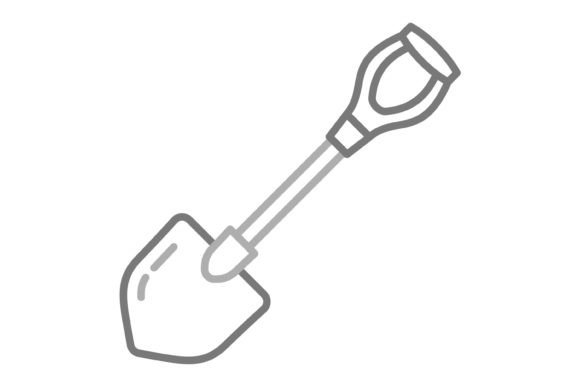
At its core, the Shovel Greyscale Line Icon is a vector-based graphic designed to represent concepts like gardening, construction, hard work, or literal digging. Its greyscale, line-art style ensures it blends seamlessly into minimalist designs, professional documents, and modern app interfaces without overwhelming other visual elements. The true value, however, lies in the package it comes in. This particular icon set arrives in a zip file containing five different formats: AI, EPS, JPG, PNG with a transparent background, and SVG. This variety is crucial, as it prepares the icon for virtually any project—be it a mobile app, a responsive website, a printed brochure, or a dynamic presentation template.
The Critical Mistake: Ignoring File Format Compatibility
One of the most common and costly errors beginners and even seasoned professionals make is overlooking the importance of file formats. You might download the Shovel Greyscale Line Icon, see the familiar PNG file, and immediately drop it into your project. This works, but it's often a suboptimal choice.
For instance, using a PNG for a website icon is acceptable, but if your site is built on a modern framework, the SVG (Scalable Vector Graphics) format is superior. SVGs are resolution-independent, meaning they look crisp on any screen size without increasing file weight, which is vital for website speed and SEO. Similarly, if you're working in Adobe Illustrator or another vector editor, using the native AI or EPS files will allow you to edit every anchor point and color with precision—something impossible with a flattened JPG or PNG.
The Better Approach: Before you even unzip the file, assess your project's needs. Ask yourself: "Will this icon be scaled? Do I need to change its color? Is it for print or digital?" Use SVG for web and app development, AI/EPS for print and detailed editing, and PNG for quick digital placements where vector editing isn't required. This mindful selection prevents quality loss and saves significant rework time.
Overlooking Scalability and "Ready-to-Use" Claims
The description "Ready to use for all devices and platforms" is a promise, but it requires your cooperation. A frequent misunderstanding is that "ready to use" means "no adjustments needed." While the 100 vector icons are designed for maximum usability, context is everything. The Shovel Greyscale Line Icon's line weight might be perfect for a desktop website but could appear too thin on a small mobile screen. Conversely, it might look too bold on a minimalist presentation slide.
The Better Approach: Always test the icon in its intended environment. Preview it on a mobile device mockup, in a printed proof, or within your presentation software. Utilize the vector formats to easily adjust the stroke weight or overall size without losing clarity. The feature "Easy to edit and scale" is your license to adapt, not a reason to assume perfection out of the box.
Common Pitfalls in Application and Aesthetics
Beyond technical specs, there are design philosophy errors to avoid. The greyscale nature of the icon is a strength, but it can be misapplied.
- Mismatched Style: Using this clean, line-based icon within a design dominated by solid, colorful, or 3D elements creates visual dissonance. It breaks the cohesive "language" of your design.
- Ignoring Semantic Meaning: While a shovel icon can symbolize "digging into data" or "groundbreaking ideas," its primary association is literal. Using it as a metaphor in a financial report for adults might confuse rather than clarify. Always consider your audience's likely interpretation.
- Poor Contrast and Visibility: A greyscale icon on a similarly toned grey background will disappear. This seems obvious, but it's a frequent oversight in minimalist designs where contrast is often sacrificed for aesthetic subtlety.
The Better Approach: Align the icon's style with your overall design system. Use it where its linear nature complements other UI elements. Be thoughtful about its symbolic meaning for your specific audience. And most importantly, always check for sufficient contrast—sometimes a simple color shift to a darker grey or black is all that's needed for perfect visibility.
What to Check Before You Commit
Before integrating the Shovel Greyscale Line Icon into a final product, especially in professional or commercial work, run through this quick checklist:
- Licensing: Does the license for this icon set permit your intended use? (e.g., client work, merchandise, unlimited prints).
- Consistency: If you're using multiple icons from this set, do they all share the same line weight, corner radius, and overall style?
- Accessibility: Does the icon have sufficient contrast? If used as a button or interactive element, is it large enough to be easily tapped on touch devices?
- File Optimization: For web use, have you optimized the SVG or PNG file size without compromising quality to ensure fast page loads?
Maximizing the Value of Your Icon Set
The inclusion of 100 vector icons in this package is a significant asset, but its value multiplies when used systematically. Don't just use the shovel icon in isolation. Explore the set for related concepts (perhaps a wheelbarrow, a plant, a hammer) to create a cohesive visual vocabulary for your project. This approach enhances user recognition and strengthens your brand's visual identity.
Furthermore, the formats included make this set ideal for prototyping. You can quickly drop the JPG or PNG into a wireframe or mockup for client approval, then seamlessly switch to the editable SVG or AI file during the final development phase. This workflow efficiency is a hidden benefit that many overlook.
In conclusion, the Shovel Greyscale Line Icon is far more than a simple graphic. It's a versatile design component that, when understood and applied correctly, can elevate your work across platforms. By avoiding the common mistakes of format misuse, ignoring scalability, and applying icons without strategic thought, you ensure that this tool delivers on its promise of usability and quality. Remember, the best design choices are informed ones—take the time to match the right file to the right context, and your projects will consistently hit the mark.