Browser Greyscale Line Icon: A Practical Guide for Flawless Design Implementation
In the fast-paced world of digital design, visual consistency is not just a preference; it is a requirement for professional credibility. Whether you are a freelancer building a portfolio, a developer coding a mobile app, or a small business owner updating your website, the tools you use define your workflow. Among the most versatile assets in a designer's toolkit are vector line icons, specifically the Browser Greyscale Line Icon. While it may seem like a simple graphic element, choosing the right icon set and understanding its technical specifications can significantly impact your project's quality and efficiency.
Understanding the Asset: What is a Browser Greyscale Line Icon?
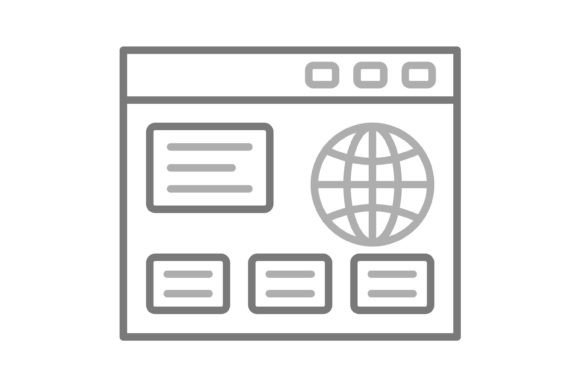
A Browser Greyscale Line Icon is a visual representation of a web browser interface, stripped of color and rendered as a simple outline. "Greyscale" implies a neutral, black-and-white aesthetic that fits seamlessly into minimalistic design trends. Unlike solid icons, line icons offer a lighter, more airy feel, which helps in reducing visual clutter on screens.
This specific asset typically comes as a comprehensive package. It is not just a single image file but a curated collection of 100 vector icons. The package is designed for versatility, including file formats such as AI, EPS, JPG, PNG (Transparent Background), and SVG. This variety ensures that whether you are working in Adobe Illustrator for print or coding a website with CSS, you have the correct file type ready to go.
The Critical Importance of File Formats
One of the most common oversights in digital design is ignoring the technical structure of the files you download. Many creators download a zip file, extract a JPG, and call it a day. This is a mistake that often leads to pixelation and unprofessional results.
When you download a set like the Browser Greyscale Line Icon, you are getting a toolkit. Here is why the included formats matter and how to use them correctly:
- SVG (Scalable Vector Graphics): This is the gold standard for web and mobile app development. SVGs are code-based, meaning they load incredibly fast and scale to any size without losing quality. If you are building a responsive website, SVG is the only format you should be using for these icons.
- AI and EPS: These are native vector formats for Adobe Illustrator and other professional design software. They are essential for print projects or if you need to customize the stroke width or shape of the Browser Greyscale Line Icon.
- PNG (Transparent Background): While vectors are superior, sometimes you need a raster image. PNGs with transparent backgrounds are vital for presentations, quick mockups, or situations where you cannot edit code. However, be mindful of resolution; a PNG does not scale infinitely like an SVG.
- JPG: This format is best for web use where transparency is not needed, though for icons, PNG or SVG is usually preferred.
Avoiding the "One-Size-Fits-All" Trap
A frequent mistake among beginners and even some seasoned professionals is treating all icon formats as interchangeable. It is not uncommon to see a website using a blurry, enlarged JPG icon where a crisp SVG should be. This happens because of a lack of understanding regarding scalability.
When you use a raster format (like JPG or low-res PNG) for an icon, you are locking that image to a specific pixel density. On high-resolution screens (like Retina displays on iPhones or modern 4K monitors), these icons will appear fuzzy or jagged. This undermines the user experience and makes your brand look dated.
The Better Approach: Always default to vector formats (SVG, AI, EPS) for any design that requires scaling. The Browser Greyscale Line Icon set is 100% vector-based. This means you can scale it from the size of a favicon (16x16 pixels) to a billboard, and the lines will remain perfectly sharp. If you are a web developer, implement the SVG files directly into your HTML or use them as background images in your CSS. This ensures the icon looks identical on a mobile phone, a tablet, and a desktop monitor.
Matching Icons to Your Design Ecosystem
Another area where creators stumble is style consistency. You might have a fantastic set of greyscale line icons, but if you mix them with thick, colorful, filled icons from another pack, your interface will look chaotic.
The Browser Greyscale Line Icon is designed with "maximum usability" in mind. Its neutral color palette makes it incredibly adaptable. However, you need to ensure the "weight" of the line icon matches your typography and other UI elements.
Practical Advice: Before applying the icons, check the stroke weight. If your website uses a bold, heavy font, a very thin line icon might look out of place. Fortunately, because the source files (AI/EPS) are included, you have the power to edit these vectors. You can thicken the strokes to match your visual hierarchy without blurring the image. This level of customization is what separates a template-based look from a bespoke design.
Common Misunderstandings About "Greyscale" and Color
There is a misconception that "greyscale" means the icon is static and cannot be changed. This is incorrect. Vector line icons are essentially defined by mathematical paths, not permanent color pixels.
If you purchase a greyscale icon set, you are buying the structure. In Adobe Illustrator or via CSS code, you can change the color of a Browser Greyscale Line Icon to red, blue, or any hex code that fits your brand identity. The "greyscale" aspect simply refers to the default presentation, which is ideal for showcasing the icon's form before customization.
The Mistake to Avoid: Do not assume you are stuck with black or grey. When using the icon for a mobile app or website, utilize CSS to change the icon color dynamically based on user interaction (e.g., changing from grey to blue when a user hovers over it). This enhances interactivity and usability.
Practical Application: Mobile vs. Print
The versatility of the Browser Greyscale Line Icon extends across different media, but the application differs.
For Mobile Apps and Websites
Performance is key. While the file size of vectors is generally small, you should still optimize your SVGs by removing unnecessary metadata before uploading them to a server. Use the transparent PNG versions only for email templates or CMS platforms that do not support SVG uploads. Ensure that the icons have sufficient padding and are large enough to be "tap targets" on mobile screens (usually at least 44x44 pixels).
For Print and Presentations
When creating brochures, business cards, or PowerPoint presentations, the AI and EPS files are your best friends. Embedding a vector file into a print layout ensures that the printer renders the lines as smooth curves, not jagged steps. For presentations, high-resolution PNGs are often easier to manage than vectors, but ensure you drag the corner handles to resize them while holding the Shift key to maintain the aspect ratio. Stretching an icon horizontally or vertically is a common error that distorts the visual message.
Final Checklist Before You Start
Before you integrate the Browser Greyscale Line Icon into your next project, take a moment to verify a few things. This "pre-flight" check can save you hours of frustration later.
- License Verification: Ensure your usage (commercial vs. personal) aligns with the license terms of the icon set.
- Format Selection: Have you selected the correct format? (SVG for Web/App, AI/EPS for Print, PNG for quick mockups).
- Consistency Check: Do the line weights match the rest of your design system?
- Optimization: If using for web, have you minified the SVG code or compressed the PNG file?
By treating your icon assets with the same care as your code or copywriting, you elevate the entire project. The Browser Greyscale Line Icon is more than just a picture of a browser; it is a scalable, editable, and professional tool designed to help you communicate clearly across all devices and platforms. Use it wisely, and it will add a layer of polish that your audience will appreciate, even if they don't consciously notice it.